Home
 Services
 Experiential Marketing
 Data
 Direct Response
 Print Services
 B2B Outreach
 Energy Marketing
 FAQs
 About Us
 Sustainability
 Blog
 Contact

Why Ad Viewability Wastes Money for Advertisers (and How to Improve It)
If you oversee a lot of advertising, online, linear, or outdoors, do you ever feel a sneaking suspicion that no one’s actually seeing your ads? Your intuition may be correct, unfortunately. The advertising metric known as ad viewability is revealing the shocking chasm between ad impressions and how many real people end up seeing online ads.
Ad viewability statistics
Why is ad viewability important? We know not all impressions will lead to engagement. But what if large portions of your ad campaigns aren’t being seen by anyone?
A recent report showed 54% of ads that advertisers were paying for were not being seen by anyone. If you’re paying for impressions, you’re in that boat, especially if you’re relying only on digital marketing.
Another report from Google revealed that 56% of all digital ads were never seen by any humans.
These depressing viewability rates suggest that more than half the online ad units advertisers pay for have no chance of ever getting a response. And that means your response rates, click throughs, ad revenue, and all the other key metrics you’re measuring face big hurdles to improvement.
If this is bothering you — it should be.
The question is, can you do anything about ad viewability? And why are so many viewable ads going unseen? We’ll answer these questions and more.

What is ad viewability?
Conceptually, viewability refers to the ad impressions that actually get seen by viewers. So, viewability will always be a percentage of the total viewable ad impressions.
The problem is, there is currently no agreed-upon definition of what is considered viewable.
For display ads including those in the Google display network, does viewability mean the location of the ad placement is visible on the screen? Does it need to be visible for a certain amount of time, such as one or two seconds? Does the entire display ad need to be visible, or only a fraction of it? If so, how big a fraction of the ad’s pixels should count? What about multiple ads served on the same web page?
Viewability standards do exist, even if not everyone agrees on them. The Interactive Advertising Bureau (IAB) defines a viewable impression as at least 50% of the ad unit or banner must be on screen for more than one second.
For video ads, Google uses the same 50% figure, but says it needs to play for at least two seconds to be considered viewable.
But is that fair? For a 30 second video advertisement, is two seconds enough for it to count as being seen? Did the viewer “get it” enough to consciously choose to skip it, or are they even aware they saw it? All this uncertainty is why there are several other ways various entities are measuring ad viewability based on certain criteria.
How do you measure ad viewability?
Calculating and measuring viewability depends on which advertising channel you’re in, and how you define when an ad is viewable.
The easiest ad viewability calculation
The most simple way to calculate viewability is to take the number of viewable ads — however “viewable” is defined — and divide it by the total measured ad impressions.
So, with 100,000 total impressions, if 60,000 of those were viewed, that would mean an ad viewability rate of 60%.
Video Ad Viewability
For video ads, you can measure the average time in view by adding up the total number of seconds viewed and dividing it by the total ads viewed.
For example, suppose your video ad was watched for a total of 10,000 seconds, and it was viewed by 1000 people. That would mean an average of ten seconds for time in view. For 30-second spots, this metric works fine. For longer video ads — some of which can go several minutes or longer — that approach might not work because the extremes will distort the average.
You might have a set of people who watch for nearly five minutes, another set that watches for less than five seconds, and not many in between.
Why is ad viewability so low compared to ad impressions?
Non-viewable impressions cost advertisers (and the regional marketing directors accountable for their spending) a pile of money. You’re paying for ads that have no chance of ever being seen. And as you’ve noticed, ad viewability is often less than half of what you were hoping for (and what you were sold). But why? Here are five reasons ad viewability rates often come in far lower than ad impressions.
The ad appears below the fold
Modern web pages tend to be very long, and viewers can only see one portion at a time. So if there’s an ad waiting for them far below the fold — the portion of the page they can see — that ad placement still counts as an impression. The advertiser is paying for it. But the user’s attention never makes it that far down the page, it doesn’t get viewed, and the ad spend is wasted.
This can also have a negative impact for PPC ads, some of which appear below the fold on the search results page. If the user clicks on links above the fold, they will never see the ads served below.
Users scroll past the ad too fast
In other situations, on some web pages and especially on social media, ad placements appear above the fold but users scroll past them without even seeing them. So user behavior affects ad viewability rates too.
This is different from ad blindness. With that, the user does actually “see” the ad, but they don’t really see it because they never look at that part of the page, since they have been conditioned to recognize ad placements on certain parts of web pages or social media sites. Those would count as being viewed, and that’s yet another reason digital ads often get such low response rates.
The ad is obscured by popups
Other times, there may be an ad on the web page, but then a popup appears that covers up the active view of the ad. If the user clicks the popup, they never see or engage with the ad.
The ad is only partially visible
It’s also easy for users to see only portions of ads. Someone scrolling down a social media page might stop at one point, and only 10% of an ad placement might be visible at the top or bottom of the screen. According to the definitions given above, that would not count as a viewable ad impression. But it still is an impression in the traditional sense.
Other users may have multiple windows open on a desktop, and these cover up ads on certain web pages.
Users click away before the ad loads
Sometimes a web page has a slower loading speed, and users might scroll past or click away before the “ad calls” get a response from the server delivering them. It’s also possible to have the ad refresh before the user sees it.

Do other media channels do better?
Most of this discussion has focused on display, PPC, and social media. But there are other marketing channels to consider when thinking about the concept of ad viewability and how you want to use your company’s marketing dollars.
Video ads
We’ve discussed this one a bit already, but think about the unique nature of video ads. Here, you have to watch the video, in most cases also listen to the audio associated with it, and be able to see the whole window where the video is playing.
On YouTube, for example, the video keeps playing even if the user is down in the comment thread. In that situation, they can hear the audio, but they can’t see the video and aren’t watching it. Should that count as a viewable ad?
You also have the same issue of multiple windows being open, viewers who let it keep playing while stepping out of the room or setting their device down, and some of the other issues discussed earlier — especially average time of view.
Traditional media ads
Impressions in TV and radio have always been tricky to measure.
You don’t know how many people are watching or listening in the same location. You don’t know if they’re paying attention, distracted, just zoning out, or have left the room entirely. Measuring impressions in these media channels depends on sample data from households selected to be part of the measurement community by companies such as Nielsen.
And with so many ways to watch, Nielsen’s numbers are more debatable than ever. Which live+ model is best? Remember when the discussion was between C3 or C7? There was even talk of C35 which openly discussed its ability to milk more money from advertisers.

What does a campaign cost?
Get a custom-built sample campaign with real targeting data, ad creative, cost estimates, and distribution plans.
Use the Project EstimatorWith digital ads, you can at least be sure — in theory — about the number of ads served, and it’s easier to record if a person could have seen it.
Direct mail
With print advertising, the ad viewability discussion changes. Here, you have everything from tossing the unopened envelope into the trash, barely seen, to fully reading every word, page, message, and image in the advertising campaign.
Consumers don’t need to look at everything to get the point of the advertisement and consider the offer. But there’s no way to determine a measurable rate for how many of them even open and glance at your mailing, let alone read and consider it.
How can companies increase viewable impressions?
What can you do to get higher viewability rates? With digital advertising, your options are limited because the publishers of sites serving ads are not usually within your control. So one option is to bypass digital entirely.
Use outdoor marketing tactics
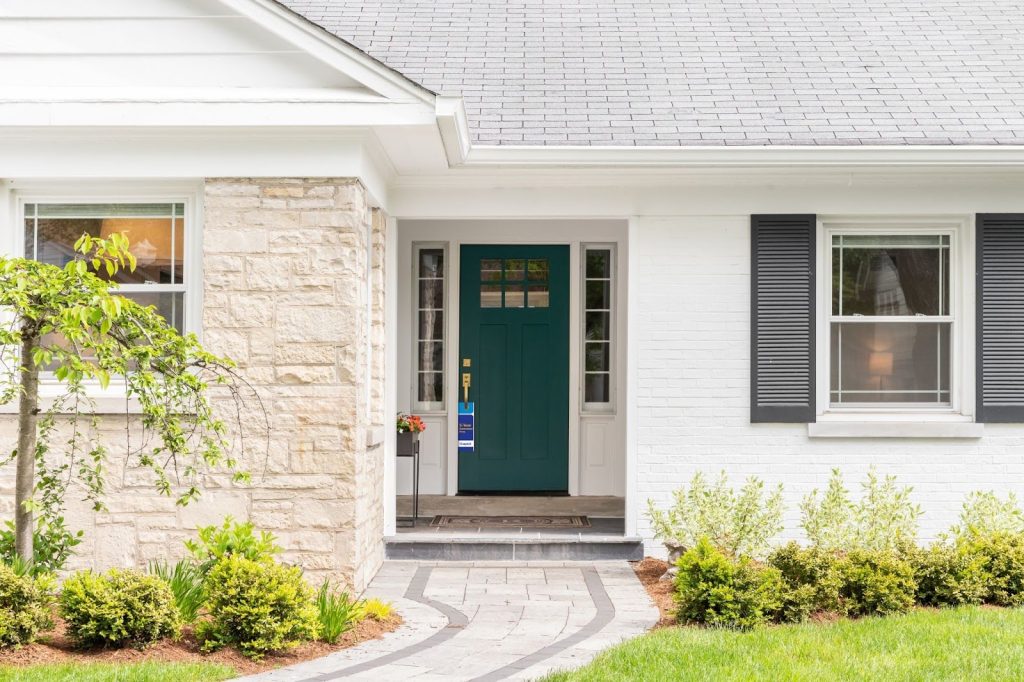
Outdoor marketing, especially door hanger marketing that engages leads right on their front porches, earns dramatically higher ad viewability than anything online. There is no competition from other ads, and no way to click or scroll away.
And door hangers beat billboards because prospects can spend time looking at the content, which can also be much more in-depth and direct than the few words you hope they see as they drive by the billboard. With the kids screaming in the backseat.
Use multichannel marketing
You can also employ a multichannel approach to increase the likelihood of more people seeing your ads, and more people seeing them multiple times. An effective blend of outdoor marketing, linear channels, and digital marketing can greatly increase overall campaign success.
For digital marketing in particular, there are a few other things you can do to increase ad viewability.
Use “Sticky” ads
With scrolling situations, a sticky ad is one that retains the same ad position on the screen even as you keep scrolling. You’re not likely to get that on social media sites, but on some websites they will offer that option, such as a top banner image that moves down as the viewer scrolls.
Promote good page design
Cluttered web pages make it harder to see ads. Again, with social media sites and PPC, there’s not much you can do. But on websites you can influence with your own on-site marketing efforts — with good page design you can increase ad viewability rates.
Leave white space. Use a clean and uncluttered design. Don’t overuse images or attention-getting visuals. Implement a clear visual hierarchy.
A good web designer who understands how these principles relate to digital marketing will be able to improve ad viewability on the sites they work on.
Improve site speed
To address the problem of slow loading speed, improving site speed is one tool you can use. The faster the site, the sooner images load and the fewer will be missed by viewers. There are several online tools you can use that give suggestions for how to improve site speed.
Use lazy loading
Implementing lazy loading is a well-known strategy for making sure pages load faster and images — including ads — get seen. Lazy loading means images don’t load until they are within the viewable window. That makes the overall page load faster.
If the industry standards of ad viewability advance, this situation should also mean that any ads that haven’t loaded yet don’t count as impressions. This would reduce the total cost of your ad spend.
Delay popups
If popups are appearing too fast, you can delay the popups so they don’t show up for a certain amount of time. This is tricky because you still don’t know where the person will be on the actual page.
You can also set pop ups to appear when a user scrolls down to a certain point. If you do that, just make sure there are no ads in that area of the web page.
Push publishers to measure ad viewability with software
This is the most impactful thing you can do to address the ad viewability problem with online advertising. Publishers — sites serving ads — can be pressed to start using third party software that will measure ad viewability and present those metrics to advertisers so they have a clearer picture of how many ads will actually be seen on that particular website.
Ad viewability is about honesty. You shouldn’t have to buy ads if there’s zero chance your ad units will be seen.

Bypass it all and use door hanger marketing — Near 100% viewability
Does all this sound stressful? Annoying? Baffling?
It sure does to us.
The good news is, while digital marketing has its advantages, there’s another form of advertising media that gets nearly 100% impressions — and nearly 100% ad viewability.
It’s called door hanger marketing, or front door marketing.
Instead of relying on online algorithms, hazy TV and radio ratings, and uncertain direct mail, front door marketing puts the advertisement right on the front porch of your chosen and targeted prospects.
Almost no one takes something from their front porch and immediately throws it away.
It’s different.
It’s unique.
It’s interesting.
It’s attention-getting.
Door hanger marketing allows you to deliver advertising that cannot be skipped, missed, or blocked. It’s not in a pile of direct mail in the mailbox. It’s the only thing there. They’ll look at it. Nearly every door hanger that we deliver gets seen.
100% viewable impressions. Maximum viewability.
No other advertising media or channel can come close to this level of performance. And that’s why companies that use Power Direct get much higher response rates than with most other forms of media — because nearly every piece of creative gets seen by the target audience.
Want to try out clutter-free advertising where you don’t have to trust some online tech behemoth to care about your ad campaign?
Get a free project estimate and Ad Targeting Customer Report you get to keep.