Home
 Services
 Experiential Marketing
 Data
 Direct Response
 Print Services
 B2B Outreach
 Energy Marketing
 FAQs
 About Us
 Sustainability
 Blog
 Contact

Audience targeting is probably the biggest single influence in how successful your marketing campaigns will be. A perfect campaign sent to the wrong audience will still fail. A mid-level or even subpar marketing campaign sent to the right audience will still produce some good results — because it’s relevant to them.
Most marketers know this. But utilizing target audiences consistently well continues to be a great challenge. Even with all the online targeting tools, a lot of campaigns still generate crickets. Why? Because online data is finicky and often outdated or just plain wrong.
But with physical mail and especially door hanger marketing being sent to the front doors of your target audience, you can almost guarantee a minimum level of success. And often, much more.
To help show you what’s possible with door hanger distribution and audience targeting, we’re going to look at five target audience examples. For each type of targeting, we’ll then raise the bar by adding on a hyper-specific targeting strategy to show you how far you can go in locating and creating campaigns for very particular audience segments.
Targeting is about relevance. And relevance is the key to marketing success.
Targeting by distance to physical stores
For companies with brick and mortar locations, door hanger marketing campaigns can be easily targeted for the ideal geographic areas around the store.
And while many think of just using a radius, you can get much more efficient if you think in terms of neighborhoods, zip codes, block groups, distance to competing stores, ease of travel, and other factors.

For example, there might be a neighborhood that’s farther away than a particular radius from the store, but if your store is easy for them to drive to compared to any of the competition, they might still be good targets for your marketing campaign.
Hyper-specific targeting — household type
For hyper targeting, you could go further than just geography and also target by various types of households. For a home supplies store, you’d want to target single family homes and not apartments or condos, for example.
For other types of businesses, you might target only families, or only empty-nesters, or only households with two or more cars.
Combining a target audience like these with geographic location gives you an extra level of precision and enables you to use very specific and relevant language in your marketing content, which will surely increase your return on investment.
Targeting by consumer behavior
Targeting your marketing by consumer behavior gives you an extra degree of relevance compared to just blasting whole zip codes or cities with marketing.
Which consumers in a particular area have made purchases relevant to your products or industry in the last year? Which have made multiple purchases? How many have spent above a certain amount? Which ones have paid memberships or subscriptions? Which have applied for a home renovation permit?
You can target for all these types of consumer behaviors, and more. And when you do, you’ll know your marketing is being sent to people who are active buyers with regard to your products.
Hyper-specific targeting — consumer buying power
Getting even more specific than just behavior, you can combine that with the buying power of the people who appear in your initial target audience.
Maybe all these people have made purchases in the last year, but how many of them have household incomes above 100k? How many have owned their homes for over 20 years?
You’ll increase your ability to offer higher-priced and more profitable deals if you target for consumer behavior and buying power at the same time.
Targeting by external home characteristics
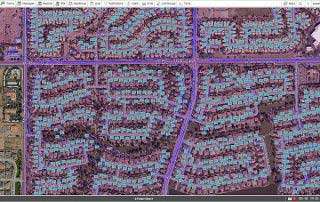
Power Direct did a few campaigns for a pool service company. We physically verified which homes in a particular area had pools, and created a target audience from that research. This way, every door hanger that company sent went to households that could benefit from their service. That’s zero waste marketing.

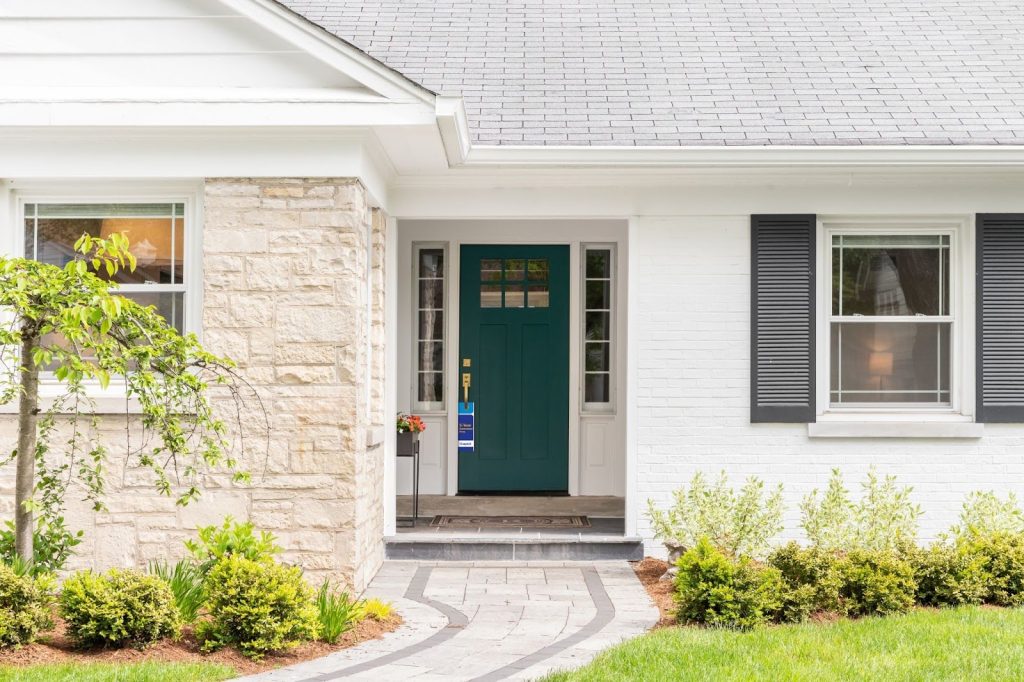
You can target certain types of homes by all sorts of traits — and you can visually verify them. Our team can help make this happen. You could target by:
- Number of garage doors
- Paved driveways
- Non-paved driveways
- Number of trees on the property
- Number of floors in the house
- Type of roof
- Cleanliness and orderliness of the front yard
Numerous aspects of a home that tell you something about each household’s potential for interest in your product or service can be visually verified and thus targeted.
Hyper-specific targeting — predictive modeling
For an even more specific target audience, you can use Power Direct’s predictive modeling capabilities to narrow down even more the initial list created through visual confirmation.
With target selection, you can identify the potential customers with visually verified features who are also most likely to react to your marketing campaign, and send it only to them. You can also use our flight risk analysis to find out which prospects are most likely to stop buying.

What does a campaign cost?
Get a custom-built sample campaign with real targeting data, ad creative, cost estimates, and distribution plans.
Use the Project EstimatorIf you’re selling a subscription or membership service, this type of predictive modeling can be especially valuable.
Targeting existing customers
One of the best targeting opportunities is to send the marketing campaign to your existing customers. You could create a campaign for a new product or service and send it to current customers in a particular region. You might also create a segment of customers who aren’t buying or haven’t yet bought an existing product, and send a door hanger campaign only to them.
This approach has the advantage of familiarity. It’s always easier to sell to current customers than to win new ones. They already know your company and will have less resistance to shopping with you again.
Hyper-specific targeting — lifestyle segmentation
One of the most effective power analytics is to segment by lifestyle. While all your existing customers may be potential buyers, you’ll do even better if you enhance that target audience by focusing on particular lifestyles.

This again enables you to create more relevant and specific marketing messages. Rather than reaching out to all existing customers, send the campaign only to unmarried adults under age 30 who aren’t in school anymore. That crowd will respond to very different messaging than over-60, near retirees.
Both groups might be in your existing customer list, but you’ll win a much better ROI by creating two separate campaigns for each target audience.
You can also segment by lifestyles such as households who travel frequently, households with kids involved in sports, households that use food delivery apps, and all sorts of other lifestyle segments.
Targeting based on personality profiles
Personality profiling and cluster analysis are audience targeting tools Power Direct uses to create new audience segments based on personality traits.
Want to send a door hanger distribution campaign to introverts or extroverts? You can do that using our descriptive modeling tools. How about a campaign for spontaneous people? Analytical people? Empathetic people?
You can create emotionally engaging messaging for your target audience when you use these tools to create your door hanger mailing list.
Hyper-specific targeting — relevant demographics
Imagine getting a list of prospects with certain personality traits, and then narrowing that target audience even more by the most relevant demographics. Now you have a hyper-relevant marketing campaign ready to send out.
Introverts who also live alone? Spontaneous people with incomes over $80k? Logical folks who’ve been employed for at least ten years? You can create target audiences with this level of precision for a door hanger distribution campaign, and your message will connect — very effectively.
Why door hangers?
All these audience targeting examples are great, but what’s with all this talk about door hangers? Can’t we do all this with direct mail too?
Yes, you can. But the difference is, pretty much everything direct mail can do well, door hangers do better. The reason is because of visibility.

Showing up in the mailbox is familiar. It doesn’t stand out. People expect to see advertising there, and they aren’t surprised when they get it — even when it’s highly relevant. You still have to overcome that inherent resistance to mailed advertising.
With door hangers, no one expects to see something on their front porch. It’s more like receiving a package. And everyone likes getting packages. Your front door marketing will be met with surprise and intrigue, not resistance.
Plus, direct mail has competition with all the other items in the mailbox that day. Your marketing has to stand out. But on the front porch, there is no competition. The door hanger is alone. And it gets the full attention of the prospect.
You get far greater impressions with door hangers than direct mail. Nearly everyone sees it and looks at it, because it’s unique and all alone. Some direct mail goes straight in the trash, unopened and unseen. But everyone sees your door hanger, because they don’t have to open it.

Get a free ad targeting report
Want to see the locations of some of your best customers?
When you request a project estimate from Power Direct, you get a free targeting report. The best news is, it’s yours to keep, even if you don’t do business with us. You can still use that data and benefit from it for years to come.