Home
 Services
 Experiential Marketing
 Data
 Direct Response
 Print Services
 B2B Outreach
 Energy Marketing
 FAQs
 About Us
 Sustainability
 Blog
 Contact

Everyone has heard of door-to-door marketing. But what comes to mind when you think about it in 2025? Do you picture the old-fashioned door-to-door salesman in a striped suit knocking on doors and displaying his wares to suspicious homeowners, sweating it out for twelve hours a day? Well, to parrot a well-known phrase, that was then, and this is now.
Door-to-door marketing in the digital age looks very different than what you might imagine.
Today, we’ve got the benefits of demographic and psychographic audience targeting, multiple marketing strategies and tactics in play, and the ability to deploy teams of trained sales representatives to work one campaign at a time in carefully selected areas of particular cities.
Door-to-door marketing is an under-utilized but highly effective strategy for companies looking to interact with potential customers and leads in a way that can’t be ignored, deleted, or scrolled past.
Door-to-door marketing has been re-imagined. Here’s how it looks in 2025 and beyond.
What is door-to-door marketing in the digital age?
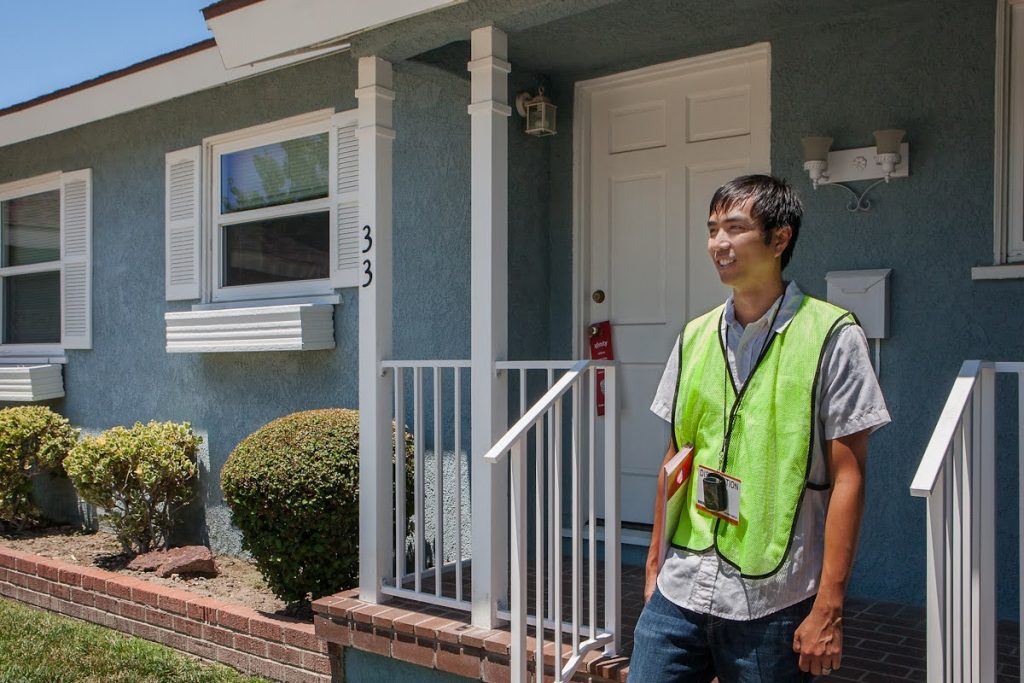
Modern door-to-door marketing is usually less about selling products or services on the spot — though it can be — and more about identifying new leads or collecting customer or industry data such as pain points or common objections. It can also enable you to build relationships with customers in person, much faster than you can through distant, impersonal marketing.
Your reps might make a presentation that covers a product or service’s benefits, but the call to action may be something with a relatively low bar, like trying a sample, taking a poll, or choosing features they’d be interested in learning more about.
Do you customers have a high average lifetime value but come with a long purchasing process and huge acquisition costs? Deploying a door-to-door team to pre-qualify prospects for future advertising spend can save a considerable amount of marketing money.
Modern door-to-door sales also means having a follow-up process that will connect potential customers to your digital marketing assets. You may just want the prospect’s contact details, such as an email address or phone number for SMS follow ups. They may sign up for a trial or register for a webinar.
Door-to-door sales campaign tactics
Other than selling actual products with door-to-door selling like the old days, think about the types of marketing tactics in use today online and in other forms of media:
- Lead generation
- Free trials
- First-time customer coupons
- Surveys and data collection
- Events and grand opening announcements
- Product samples
You can create highly successful door-to-door marketing campaigns using sales techniques like these. Since you’re reaching prospective customers at the front door, your engagement metric data will be far better than you’d ever achieve through most other forms of media.
Representatives are optional
You can do all of this with trained sales representatives who engage people at home, in person. They can talk about new products, offer free trials, conduct surveys, and offer coupons and samples. We call these brand ambassadors, and they operate differently from a traditional “sales rep.”
Door-to-door marketing doesn’t need to involve an actual door-to-door salesperson. You can have great success reaching your leads and target audience using front door marketing that gets placed at their door by trained and monitored distribution teams.
With smartly designed front door marketing managed by a company like Power Direct, you can deliver announcements about events, give coupons for free samples or discounts at a nearby brick and mortar store, offer signup opportunities for trials, lead generation assets, and email and SMS lists, and so much more.
You can use QR codes, coupons and landing page links with tracking codes, special phone numbers, and all the other tools available to digital marketers. But here, nearly everyone you reach out to will see your content, as opposed to the sub-2% that’s typical on many digital and social media platforms.
Who conducts door-to-door marketing?
Door-to-door sales campaigns can work for a great variety of industries, especially when you expand your definition to include front door marketing. With that, you don’t need a sales script, sales techniques, a sales team, or anything of that sort. You just create the collateral, have it printed, and have it distributed by a trained team that gets audited to ensure 100% delivery.

At Power Direct, we’ve run door-to-door marketing campaigns for industries as diverse as:
- Huge national telecom companies
- Internet search engines
- Retailers (of nearly every kind)
- Prepared food manufacturers
- Restaurants — especially quick service and fast-casual
- Healthcare companies
- Local pool cleaners
- Insurance companies
Door-to-door sales can work for just about any industry. You just need to commit to enough volume to generate a return, as with any marketing, and acquire a target audience of households or neighborhoods to visit.
How to develop door-to-door sales teams
This is easily the greatest hindrance and most common question about door-to-door marketing. Who’s going to go out there and do it? The answer depends on which of the two main types of door-to-door selling you’re planning to use — brand ambassadors or front door marketing.
Brand ambassadors are the modern version of the door-to-door salesperson, though they don’t necessarily have to go door-to-door. And, they don’t sell products or services… or carry around a Hoover. Front door marketing gets distributed by hand to chosen addresses in your target market.
It takes a team to conduct either approach, and both are best suited for particular sales situations. Let’s look at how to develop each type of team.
Develop brand ambassadors — selling door-to-door
If you’re planning a door-to-door sales campaign conducted by actual reps who will knock on the doors of potential customers, you’ll need a team of trained sales reps who understand your products or services and your customer base on a basic level.
Even if they’re just conducting a survey, they need to be prepared to respond appropriately to any interested leads.
What makes a great door-to-door sales rep?
As Liam Neeson would say, it takes a particular set of skills. Some of those skills can be trained in a relatively short time, such as basic product knowledge. Others have more to do with the person, such as having a positive attitude. In other words, there are hard skills and soft skills, and the best sales reps possess both. Here’s what to look for in a successful door-to-door salesperson:
They’re teachable and trainable
Great sales reps begin with a script, and this is true even if they just plan to gather information through a survey. They need a clear understanding of what to say, why it’s important, and how it works. They need to know features and benefits of the product or service and the company they’ll be representing, and how it addresses the customer’s pain points if you’re selling something.
They’ll need a plan for overcoming objections — like “I don’t have time.” Potential customers appreciate it when the door-to-door salesperson can actually answer their questions and not waste their valuable time. With an effective training process and a few basic door-to-door sales tips, you can develop a competent team of temporary brand ambassadors.

They’re great at communication and forming personal connections
A door-to-door salesperson needs to be good at asking open-ended questions of the prospective customers they will visit. They need to be able to read body language and be aware of their own facial expressions, tone of voice, and posture. They need to be able to listen carefully and be paying attention to what prospects are saying.
You also want a door-to-door rep who makes other people feel comfortable so they don’t feel like this is some stranger pushing something they don’t want with a rehearsed sales pitch. For starters, smile. Be friendly and polite. Be prepared to face rejection, and don’t take it personally. Building trust makes all the difference when it comes to effective prospecting.
To build relationships the first time you have a personal interaction with a potential customer requires some innate understanding of these sorts of abilities, and a degree of self-confidence. They need to be able to make eye contact and relate to prospects on a personal level. An effective door-to-door sales person also needs to dress appropriately.
How to train a team of brand ambassadors
You can develop your own in-house process for developing a mobile team that has the ability to engage prospects and potential customers in conversation. Or, you can seek out a company that already has a successful program for door-to-door sales and marketing. Obviously, this second approach saves time (and money in most cases).
When you work with Power Direct, we handle all the hiring and training of your brand ambassadors, if that’s the type of door-to-door marketing campaign you’re interested in utilizing.
Power Direct’s hiring process
We have connections with talent reps in cities across the country, and we have full-time in-house supervisors who will train and manage your brand ambassadors no matter the location.
We hire effective door-to-door sales and brand reps who exhibit the skills and abilities listed above, and who are teachable, outgoing, and enthusiastic. We establish expectations, train them to understand your target audience and marketing approach, give them enough product knowledge to handle objections and make the sales pitch, and run through any necessary sales skills they may need.
And again, when we use the term “sales pitch,” that includes all possible types of door-to-door selling, including surveys, free trials, and lead generation, not just direct selling. In fact, actual selling is probably the least common strategy businesses use door-to-door sales techniques to pursue.
We’ll make sure each door-to-door salesperson knows how to direct your potential customers and leads to the next steps — no matter where a prospect lands on the spectrum of interest.
Here’s more about how we staff brand ambassador teams for door-to-door sales campaigns across the United States.

Develop a team for front door marketing distribution
The other type of door-to-door sales campaign doesn’t require a face to face approach to build rapport with prospects. With this strategy, you create a robust, sturdy door hanger or some other type of unique asset that’s impossible to ignore and that gets delivered to the front porch.
If you want to engage a much larger number of potential customers and prospects, the door hanger strategy offers the right combination of high impressions, audience targeting, and mass marketing.
For this type of campaign, you don’t need sales reps. You need distribution teams. And our process here is comparable to how we find brand ambassadors. The only difference is the skillset.
For distribution campaigns, you need people who:
- Can hustle
- Are responsible enough to place every item at the correct address
- Dress appropriately
- Understand that even though they aren’t going to interact with customers, they still represent your company to anyone who might see them placing items on front porches
- Behave professionally
- Use technology to record all their deliveries
Again, we have full-time, W2 in-house supervisors who manage distribution campaigns and work with distributors in each city.
What media can you use with door-to-door marketing?
The media you can use through door-to-door sales strategies depends on the type of campaign, your sales goals, your product’s benefits and features, your follow up process for new leads, and the other components of effective field marketing.
Let’s look at the various media you can use for both door-to-door sales strategies:
For brand ambassador campaigns
With a door-to-door salesperson, you can equip them with whatever media will be beneficial to their presentation or sales pitch. If it’s a survey, using an iPad or similar device to record results is the fastest way to go. So your primary media would be your survey collection software and the content within.

What does a campaign cost?
Get a custom-built sample campaign with real targeting data, ad creative, cost estimates, and distribution plans.
Use the Project EstimatorBut, you may also want brochures, flyers, or other physical media that explains more about the survey, its purpose, or whatever follow-up materials you intend to give each person who completes the survey such as:
- Coupons
- Free trials
- Contest entries
- Access to membership, rewards, or VIP club
- Gift cards
- Referral rewards information
- Affiliate marketing content
If it’s not a survey, the items in the above list could be the motivation for your door-to-door sales campaign, and you would need whatever media enables your salespeople to explain the pitch, as well as provide follow-up materials for any new customers.
Supportive digital content
In addition to all these, you may have digital content just a few clicks away that supports your campaign and that your prospective customers can access through the physical media you’ll be giving them.
Trial periods and other items on this list will do well with landing pages if the prospect isn’t ready to decide what to do on the spot. Basically, anything you’re leaving with them should have a digital component that enables customers to act. Having something to leave behind will increase conversions.
Remember — you might not be conducting a survey or other type of prospect research. The brand ambassador campaign may be designed with other lead generation goals in mind — like trial signups or first-month offers.
Your digital media — accessible via QR code or a simple web address that should be easy to find in your physical media — may include landing pages, social media pages, blog posts, product pages, sales pages, opt-in forms, entry forms, videos, infographics, and all the other digital marketing technology in use today.
For front door marketing campaigns
Here, the types of media are limited mostly by your creativity — other than it needing to be printed.
And as with the brand ambassador campaigns, any door-to-door sales campaign can also leverage the power of digital media. You just have to create the digital content before finalizing and sending out the door-to-door sales campaign. Some physical media you can use with front door marketing includes:

Door hangers
The Power Direct version of door hangers aren’t flimsy slips of paper that fly away in the breeze. Ours are large, sturdy, and durable. And, they’re made from environmentally friendly products — including the inks we use.
Door hangers are large enough to communicate a complete marketing message. You have room for graphics, headlines, persuasive copy, testimonials, photos of happy customers, photos of the products, calls to action, contact information, URLs and QR codes for digital access — plus interactive elements like scratch-n-sniffs, free samples, and tearable coupons.
Door hangers are so effective because you get nearly 100% impressions. They aren’t mail, and won’t get perceived in the same negative way. It’s a unique strategy that gets attention and will increase your ability to connect with customers.

Flyers
Flyers are a version of door hangers, and for Power Direct, we use these terms relatively interchangeably. But, you can also get the traditional version of a flyer, which does tend to be flimsier and less versatile than a door hanger.
Custom creations
You can also create marketing assets that are unique to your business or your offer. For example, we’ve done door-to-door marketing campaigns with door hangers shaped like toilets, dog bones, and pancakes.
The more creative you get, the more prospective customers will come your way. Who’s going to throw away a dog bone door hanger? Especially if they have a dog?? (which they will if you target your distribution properly).
Catalogs
For a business with lots of products, you can also leave catalogs on the front porches of potential customers. Yes, you can send these through the traditional mail too, and some companies do. But on the front porch, the customer’s perception is different. It’s more positive. This feels like a package, a gift, rather than just “mail.”
And, back to brand ambassadors, catalogs are a great thing to leave behind after the door-to-door salesperson has completed their presentation.

Samples, kits, and other creations
Sometimes you just need to get your products into prospects’ hands for them to understand and become lifelong customers. In-store sampling is fine, but it’s sporadic, not very targeted, and inefficient.
We can (and have) deliver nearly any kind of product sample or kit. It’s a faster, more efficient way to get samples directly into the hands of highly-targeted households and neighborhoods. Less expensive than the mail (and better perceived, too!)
Can you do audience targeting with door-to-door sales?
Digital marketers like to talk about how well they can help you find your ideal customers. And they can — sort of. But it’s getting more difficult, with privacy concerns causing new regulations and online security systems to sprout up. These increase the challenge of accessing the hyper-specific customer information that got everyone excited about online marketing in the first place.
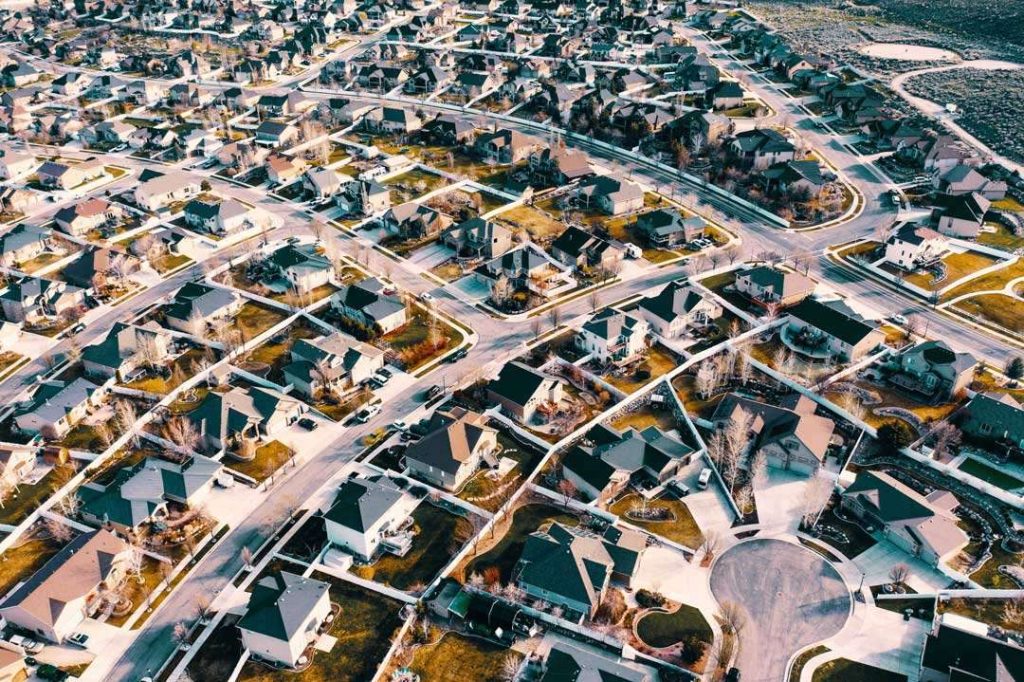
Targeting a front door campaign involves much more than just drawing a radius around your store locations or entering a zip code. With hundreds of demographic variables, up-to-date customer behavior information and an entire in-house research team with the most advanced technology tools available, we can pinpoint the exact streets where your best prospects live.
You don’t just blanket whole swaths of a city with your door-to-door sales materials. You target one house at a time, or block group by block group.
We have access to over 4000 factors you can use to narrow down your target audience.
Door-to-door sales targeting examples
There are six categories of targeting you can use with door-to-door marketing.
Want to find homeowners with pools who own at least one pickup truck and have kids in the home? You can create a door-to-door sales campaign for that audience. In fact, you can go even further.
Here’s a couple examples of real audience targeting projects we did with a big box grocer and a quick service restaurant.
The idea is to narrow it down so well that your costs decrease while your response rates, conversions, revenue, and return on investment increase.
Custom ad targeting report
How would this work for your business?
Imagine having a customized audience targeting map with demographic profiles — before you even start your campaign.
You can get a Custom Ad Targeting Report from Power Direct — and you can keep it and use it over and over again even if you don’t end up working with us. It’s yours to keep as part of our project estimate process.
You’ll also be shown the types of media we recommend, a distribution timeline, budget estimates, and previous prospect response data.
Get a free project estimate and a Custom Ad Targeting Report
Auditing the distribution of your door-to-door sales
Hiring the right people to distribute your door-to-door marketing materials is probably your biggest question mark, which is why we talked about that earlier.
A second question is, how do you know for sure they delivered your stuff to the right addresses? Or, worst case scenario, how do you know they didn’t just throw them all in a dumpster and get paid while hanging out at the bar?
With typical door hanger distribution services, you don’t. You just have to hope their employees followed through.
But with Power Direct, we use a 6-point auditing process that you can follow in real-time on our iVerify platform. You can watch your marketing materials get delivered live as it happens.
This is way beyond GPS. Here are the six ways we verify 100% distribution:
- Delivery crews click a device every time they make a delivery before heading to the next house
- The click gets time-stamped so you know when it happened
- The click must take place within a small radius from a predetermined marker for each address (so they make it to the door… not the street)
- GPS data from the crew member must align with the three previous data points
- Our California-based monitoring center supervises every delivery and immediately calls out any anomalies to the on-the-ground supervision and auditing team
- In-the-field employee auditors document distribution with pictures you can view from the customer portal, and identify issues and find solutions in real-time
You’ll know who delivered each piece, to which residents, at which time of day, and you’ll even know how fast the person was walking.
Measuring door-to-door sales metrics
Lastly, you can track door-to-door marketing effectiveness using many of the same strategies you’d use in direct mail, digital marketing, and even in most traditional media.
Trackable phone numbers, dedicated landing pages with specific URLs, coupon codes, QR codes, customized and personalized marketing — these are a few ways you can track progress as part of an effective door-to-door sales campaign.
As with any other customer outreach, all it takes is some focus and planning on the front end, and you can sprinkle these elements into your door-to-door sales process.
You know the cost of your campaign. With these tools working on your behalf, you’ll be able to record metrics like response rates, conversion rates, revenue, net profits, average transaction size, and whatever other measurable goals you want to track.

Try your next door-to-door marketing campaign
Ready to give this a go? Tired of competing against every other business in the endless crazy world of digital marketing?
With door-to-door sales campaigns — you have zero competition during the moment your message connects with prospective customers, leads, and prospects. No competitors will stand next to your door-to-door salesperson waiting to make their sales pitch.
Your prospects will be paying attention to you alone — for much longer than they would with a social media ad or for the few seconds it takes to sort junk mail over the trash bin.
Talk to a Power Direct consultant, and get your custom ad targeting report as part of your free project estimate.