
 Home
 Services
 Experiential Marketing
 Data
 Direct Response
 Print Services
 B2B Outreach
 Energy Marketing
 FAQs
 About Us
 Sustainability
 Blog
 Contact

We know out of home (OOH) advertising works. You’re even seeing online-focused brands redirect large portions of their ad budgets to OOH.
But does all out of home OOH advertising deliver comparable results?
How do you know which type of OOH advertising to use? Is digital OOH better than traditional OOH formats? And what is digital out of home advertising anyway? We’ll explore these questions and walk you through the most popular and effective forms of advertising in the OOH space.
Then, we’ll identify the surprisingly most effective form of outdoor advertising. And it’s not billboards.
Out of home advertising is growing in the digital era
First, let’s get one thing straight — the OOH advertising industry isn’t going anywhere. In fact, it’s growing.
Outdoor advertising generated over $9 billion in revenue in 2024, a 4.5% increase from the previous year. And digital OOH accounted for more than a third of that. And the top industries using OOH advertising range from banks to restaurants to hospitals to law firms, and everything in between. OOH advertising is projected to surpass $10 billion in 2027.
Does OOH advertising work?
88% of adults have seen out of home marketing in the last month, and 82% of them remember it. OOH campaigns generate $5.97 in product sales per dollar invested. Even better, out of home advertising dovetails well with your digital marketing efforts, boosting digital campaigns by 31% and social media marketing by 56%.
Another report found that OOH advertising increased ad awareness by 13.3%, which was more than TV, digital campaigns, and connected TV advertising.
With ongoing brand recognition, strong ad engagement, and the ability to provide seamless integration with your online efforts especially through the use of digital out of home ads — OOH advertising enables you to reach audiences in eye-catching ways that make a lasting impression.

Why is out of home advertising growing?
Because it works. It gets noticed. It can’t be clicked away from.
Want more retail foot traffic? More online traffic? Nielsen reports that out of home advertising is the most efficient medium for delivering qualified traffic to your website. Again — these are qualified visitors taking real actions, not fake and worthless traffic like bots and spammers. And, consumers trust it because it can’t be faked.
Comparing OOH media options
So we know the OOH industry is growing, and we know it’s an effective form of advertising. But which type of out of home advertising will be most effective for your company, marketing goals, and budget?
Let’s run through some of the most popular forms and locations of out of home ads.
Digital OOH ads
For many of the options you have in the OOH space, there is a digital version of them. Not always, but usually. Digital out of home advertising simply means the ad isn’t static, but instead uses digital screens and other programmatic capabilities to showcase dynamic content.
Billboard advertising, for example, can be done with traditional print or with digital screens. The digital ones attract more attention because you can use dynamic media. The images and text can move, change color, and be updated more easily than static billboards. One study found that 65% of viewers took action after seeing a digital billboard.
Airports
Airports offer terrific OOH advertising opportunities because they are super crowded with foot traffic and many people have to wait there for hours, allowing advertisers time to get attention. Your airport OOH ads will get seen. And you can use many forms of out of home campaigns in airports including posters, kiosks, panels, and digital out of home ads.
The main weakness of airport advertising is that many people in this setting are busy and frantic and just want to reach their planes. Getting even a few seconds of their attention can be a challenge. You have to interrupt them from what their minds are focused on.
Plus, a common problem to many OOH media formats is the struggle to target based on audience demographics. Advertisers don’t usually have much control over who sees their ads, and most people who do are not in their target audience. Airport advertising is no exception. However, depending on what you’re offering, everyone in airports does have one thing in common — they’re flying somewhere. If what you’re selling can be aligned with that, then almost everyone becomes part of your audience.
Bus interiors
Like airports, the interiors of public transit vehicles are filled with people just sitting there. They either have to look outside, look at devices or items they brought, look at other passengers, or look at the ads and interior features of the bus. As with airports, your transit-based OOH ads will get seen by a lot of people.
The weakness of bus interiors is that these ads can suffer from the background effect. Especially for frequent riders, they barely notice the ads because they see them every day. And, not every rider can see the entire interior of the bus. So only the riders situated within sight of your ad will actually see it.
Bus benches
Bus bench ads have the advantage of being visible not just to people preparing to ride transit, but to cars and passersby as well. They are less dependent on people using the location. In contrast, airports and bus interiors are only seen by people who are using those services.

The main drawback of placing ads on bus shelters and other street furniture like train stations is that when people are sitting on the bench, you can’t see the ad. Some bus shelters have taller structures to keep people out of the rain, and the advertising on these will often be higher up and larger, and thus doesn’t get obstructed as easily.
Cinema — shown before the movie starts
Pre-roll advertising in movie theaters is increasing. In August 2025, AMC joined the other major theatrical chains in featuring ads before the movie starts. Here, you have the advantage of a captive audience who came to watch a movie, and you have large screens. Plus, you can use all the other tools available for video ads such as sound, humor, special effects, dynamic content, and typical commercial features.
The primary weakness of cinema OOH ads is their disruptive nature. Audiences can get annoyed by these because they paid to be here, and some resent having to then sit through ads. As consumers wise up to this, some are simply showing up late on purpose, knowing they’re only missing ads.
Kiosks and pedestrian panels
Especially in high foot traffic public spaces such as crowded streets and shopping centers, the print and digital versions of kiosks, posters, and panels have proliferated. Some of these have even used interactive and dynamic content, as well as augmented reality features.
The idea here is the same as traditional OOH — high visibility through the use of strategic locations. Lots of people will see this type of outdoor advertising. More eyeballs means you can increase brand awareness and earn higher response rates.
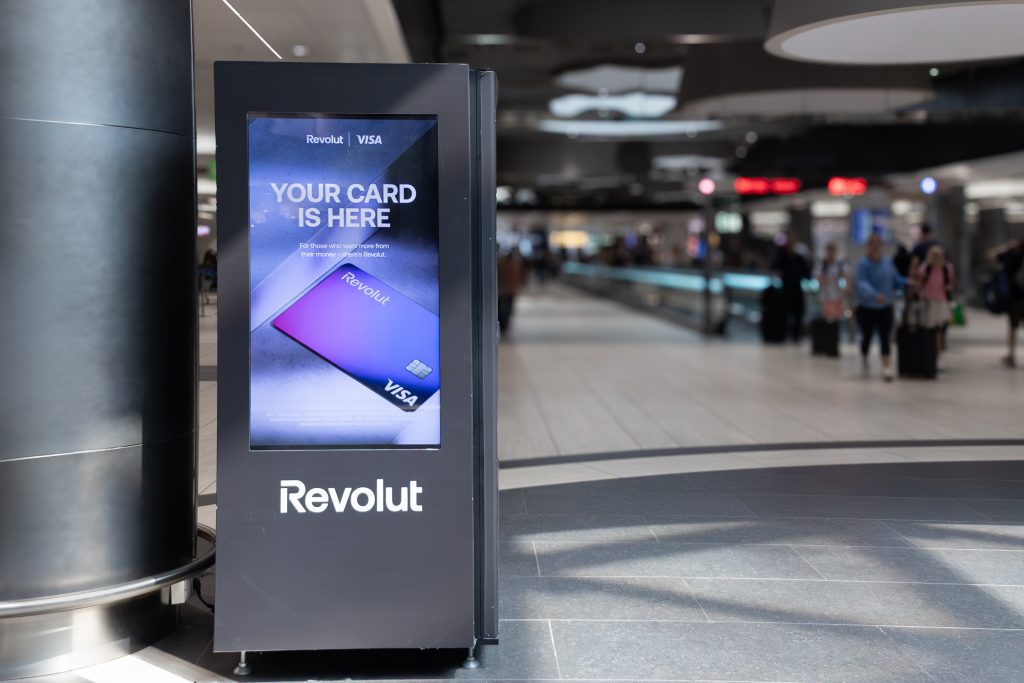
The primary drawback of kiosks and urban panels is similar to other items on this list — people in these settings are going somewhere. Your ads must get their attention enough to interrupt their routine and give them time for consideration. But that’s the nature of most marketing efforts, and this OOH space can have a significant impact on consumers.
Taxi cabs (inside the cab and on the roof)
Like buses, taxis offer interior and exterior OOH advertising. Inside, only the passengers will see it. But on the roof, anyone walking or driving by can see your ads. And because taxis are so much more mobile than buses, they expose your ads to more parts of the city. Taxis also offer digital signage options in some cases.

What does a campaign cost?
Get a custom-built sample campaign with real targeting data, ad creative, cost estimates, and distribution plans.
Use the Project EstimatorBillboards
And of course, the classic billboard is still alive and well. With large signage — advertisers can reach hundreds of thousands of people. And these can be especially effective for local businesses, especially if the business is located near the billboard. In such cases, you can even describe your location on the billboard itself with phrases such as “right around the corner” and “keep driving, you’re almost there”.
The weakness of billboard marketing is once again the background effect. They’re easy to see, but also quite easy to ignore or just miss entirely. Driving does require a lot of attention. But because the billboard will be there — usually for months — you overcome this drawback with the longevity of the ad.

Other OOH campaign options
This list so far represents less than half of the types of OOH media you can utilize to reach targeted prospects. It’s a lot more than just billboards and blimps.
So you have other media options. And with the tracking and targeting advancements made possible by today’s technology, advertisers can in some cases target demographic and geographic categories with out of home advertising, much like you try to do online.
The common weakness to nearly all OOH media
But, as effective as OOH ads can be, all the OOH advertising options listed so far suffer from the same underlying problem:
The viewer has the option to look away.
Again — OOH campaigns are far more effective at gathering eyeballs than anything online. You can’t minimize it. You can’t click away. You can’t scroll down. The advertisement is there, and you have to see with it.
But you can ignore it. Quite easily. You can choose to not engage it. You can choose to not even look at the offer or message. And in many cases, you just won’t see it at all, because you’re busy with real life, focused on something else, or distracted.
And it is in this detail that the most effective media option for out of home advertising emerges:
Front Door Out of Home Advertising — Premium-Level OOH
With front door marketing, the viewer has almost no choice but to look at your ad. It’s on their front door! What are they going to do with the flyer distributed, leave it there? Even if they take it directly to the recycling bin, they are quite likely to read at least part of it along the way.
No distractions
For other OOH ads, advertisers must work hard to break through the noise to get and grab attention long enough for the purpose of the ad to be achieved. The background effect is very real and powerful.
But with front door marketing, there is no background noise.
There is a single advertisement, strategically placed on their front porch. For a few moments, that advertisement will consume their full attention. With front door marketing, you have more time and fewer distractions between you and your prospect. Fewer than any other form of OOH media. Far fewer than traditional media like radio and TV. And far, far, exceedingly far fewer distractions than anything online.
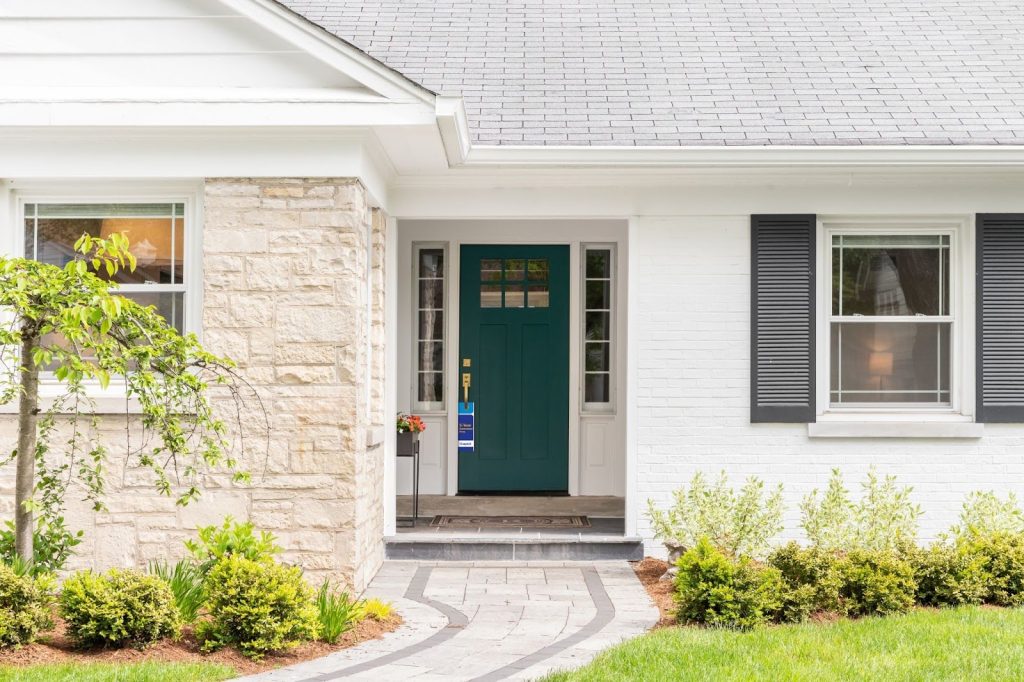
Power Direct is a huge fan of the OOH strategy because we know that the key to successful marketing is to break through the clutter and grab attention. An ad unnoticed is an ad without a purpose… and without a response. You must get noticed, and most of the out of home options beat most of the others at this, especially online.
Many forms
There are many forms of front door advertising. It includes door hangers, but also includes things like yard signs, brand ambassador marketing, and experiential marketing.
And door hangers can be much more than tiny flyers that blow away in the breeze. Power Direct’s door hangers are large, sturdy, and attention-getting. They are very much like mini-billboards, except unlike billboards, you can’t miss them because they’re on your front porch or yard.
Power Direct also offers brand ambassador staffing and services, which features a whole range of methodologies to engage your targeted prospects with personalized messages.
Exceptional targeting with smart data
Experiential marketing and door hanger marketing also offer exceptional targeting capabilities. Here, you’re benefitting from the more precise targeting methods of direct mail and certain forms of digital marketing, while also getting all the benefits of out of home advertising.
It’s the best of both worlds.
Maximum visibility
If you send out a hundred thousand door hangers, you will get close to a hundred thousand impressions. This makes front door marketing a more cost effective approach than traditional OOH advertising.

Front door marketing stands alone as the only form of direct mail marketing that reaches 100% of its targeted audience. Every household that receives the mini-billboards we place on their doorsteps will see it. Plus, the majority of people who see other types of OOH ads are not in your target audience. And what percentage of those who are in the target audience will see and respond to those ads?
It will be a much lower percentage than with door hanger marketing.
Try front door marketing
Is out of home advertising a strong option for targeting ideal prospects? Yes.
Will it capture more attention than anything online? Yes.
Will it capture more attention than traditional media? Most of the time.
Front door marketing says yes to all those questions too — but it also offers 100% ‘impressions’ within your targeted audience — which every home can be when you take advantage of Power Direct’s proprietary targeting and auditing processes.
No other form of media can offer anything close to 100% impressions. Now, all you have to do is go write a good ad.

