
 Home
 Services
 Experiential Marketing
 Data
 Direct Response
 Print Services
 B2B Outreach
 Energy Marketing
 FAQs
 About Us
 Sustainability
 Blog
 Contact

What Your Competitors Don’t Know About — with Two Real Business Examples
To maximize the efficiency of your marketing dollars, you must excel in audience targeting. This is even true of outdoor advertising.
You might be wondering how you can zero in on a target audience using outdoor advertising. But that’s because when most marketers think of out of home advertising (OOH advertising), they think of digital billboards and other broad reach outdoor ads.
As you’re about to see, outdoor advertising offers many other opportunities to reach your target audience that are closer to what you can achieve with online marketing and direct mail.
You probably know something about targeting online, and all the data available on the various online platforms. All of that intrusive data is irking a growing number of consumers in their privacy bones. But from a marketing standpoint, even with what online and social media platforms can deliver in targeting, they often lose in chaos, distraction, and noise. It’s hard to attract attention in digital marketing, especially social media.
So if you’re looking for a way to directly engage with more of your target audience through channels other than the digital ones, you’re about to learn the secrets to audience targeting in outdoor advertising.
Basic targeting methodology — What everyone knows
You know the basics of target market advertising — you want to find consumers based on age, income levels, location, gender — those sorts of broad demographic data categories. And that’s where most marketing efforts should begin.
But it’s not enough.
Suppose your brand sells home improvement materials. You wouldn’t want to waste your advertising on consumers living in apartments — even if they’re in your ideal demographics for all those broad categories. You might also create different types of campaigns for rural vs suburban vs urban areas.
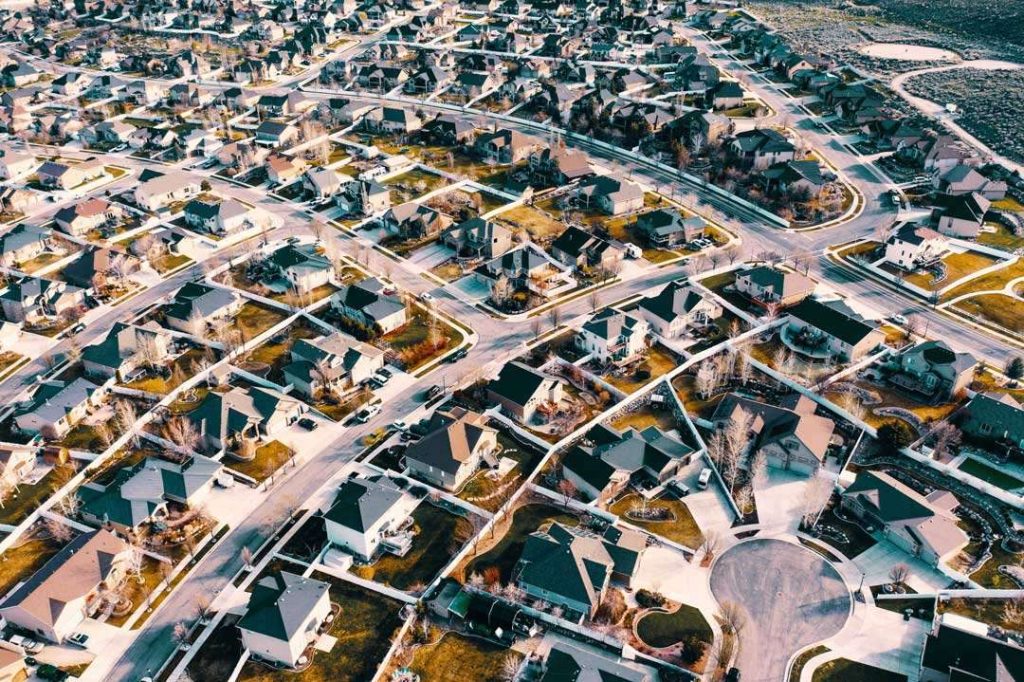
You can also do basic audience targeting using traditional media platforms like TV and newspapers. These reach a wide audience that can be somewhat narrowed by certain preferences. But it’s hard to get very specific and know who is actually seeing your ads.
Using the mail, you can use EDDM (every door direct mail), which targets postal routes, which are much smaller than ZIP codes. That’s a less costly method for reaching a target market through direct mail, but it’s also harder to get consumer attention because EDDM limits what you can send.
Problems with traditional OOH ads
For outdoor advertising campaigns, basic targeting usually means finding digital or static billboards, or other signage such as street furniture, in high traffic areas where you think your ideal customers are more likely to be.
But OOH ads like these simply can’t target very well because they are fixed in place. They are, by nature, mass advertising. Yes, it matters which billboards you use. Yes, digital billboards capture attention better than static ones. And yes, you can use mobile OOH advertising like transit ads.
But all these forms of OOH advertising can’t get beyond their limitations — they depend on high visibility and must hope the right consumers see them and that the ad recall effect is strong enough to produce a response, since most who see outdoor ads aren’t in a position to respond at that exact moment.
None of these methods offer the hyper-efficiency of the advanced out of home targeting methods you’re about to see.
Advanced outdoor targeting methodology — What hardly anyone knows
No form of advertising gets higher impressions than door hanger marketing. It bypasses all the gatekeepers, distractions, and weak targeting inherent in most other forms of media, especially traditional out of home advertising.
But only if you do it right.
Plastering neighborhoods with flimsy fliers is so 20th century. ZIP codes and drawing a radius around your store doesn’t work either because you’re still including too many consumers who have little to no chance of buying your products. It’s a huge waste of resources.
Why ZIP codes and drawing a radius isn’t enough
Again, consider the home improvement products store. A radius or a ZIP code is bound to include apartments and condos which spend very little at these businesses. If you remove those and focus on homeowners, you’re still not being specific enough, because what about home renters? What about retired people or on-the-go professionals who hire contractors to do their home improvement work for them?
Removing them, now you want to consider the age of the homes. Newer neighborhoods are probably less likely to spend as much the first few years of their existence. And people making very little money, even as homeowners, also are less likely to spend much.
Blanketing ZIP codes and areas of a city is guaranteed to result in quite a bit of wasted ad spend for many outdoor advertising campaigns.
So what does advanced outdoor targeting look like?
Use data to fine-tune your target audience
With the home improvement example, you might focus on married homeowners over age 30 living in homes five years or older who make at least $80,000 per year, and who have spent money on remodeling projects within the past two years.
That’s just one option. You could also look at homeowners who own a pickup truck, because truck owners tend to be people who like to do things themselves.
Block groups
Most importantly, you would not rely on ZIP codes, store radius, or even postal routes. You would use what we call block groups. About 95% of products marketed through Power Direct are delivered at the block group level.
For comparison, a block group tends to be about one thirtieth the size of a ZIP code. It’s a neighborhood level, street by street approach to finding a target audience. And we have data on about 600 different demographics at the block group level, some of them extremely specific like in the example just given.
We can create a data set of consumers that is far more exact than anything you’ve imagined for out of home advertising or door hanger marketing.

What does a campaign cost?
Get a custom-built sample campaign with real targeting data, ad creative, cost estimates, and distribution plans.
Use the Project EstimatorIn fact, you can get a sample set of data for yourself for free, right now.
Click here to get real customized data about where your best customers are located. It’s free, you get to keep it, there’s no obligation to buy, and you don’t even need to provide a bunch of personal information.
Let’s look at a couple real examples to see how this form of advanced targeting for outdoor advertising has worked for some of Power Direct’s customers.
Real examples of audience targeting for outdoor advertising
Example 1: Big box grocer
A competitor was going to open a new store within proximity of one of our client’s stores. Rather than just send out a targeted front door advertisement to every home within a certain radius of the store, here’s what we did in response:
Competitive analysis
We drew a radius around both stores, and looked at the area where they overlapped. Why? Because for grocery stores, most people shop based on proximity first, and other factors like brand recall second. So we’re probably going to lose a lot of consumers who live right next to the competitor’s new store. It’s not worth the budget to go after the handful who might still come to the established store.
But where the radiuses overlap — this is where the competition will play out.
Within that overlapping zone, we looked at which neighborhoods spent the most money at wholesale businesses — a very particular subset of grocery shoppers. Within that we found about 100,000 households. That’s still a lot of mailings. So, we moved to phase 2.
Narrow it down with advanced targeting
Which demographics reveal our most likely customers in this scenario? We cut the 100,000 households in half, selecting the 50% who spend the most money at wholesale type businesses. This makes financial sense from an ROI perspective. Go after the big fish.
Then, we narrowed that down even more by selecting households with families. Why? Because among the big spenders, they will spend even more simply because there are more people in the house.
Highly-targeted, effective advertising campaigns
So now, we have a hyper-specific target audience and can create a front door marketing campaign that is highly likely to capture attention and generate a healthy long-term return on investment:
- located within a certain radius
- located within a zone overlapping the radius of the competitor’s store
- neighborhoods within that zone that spend the most on wholesale
- top 50% of spending
- households within those neighborhoods
- households within that group who have kids
We could have narrowed it even further to families with two or more kids, pets, multi-generational, etc. Much of this depends on the budget you want to spend and how aggressive you want to be.
Why front door marketing?
Also known as door hanger marketing, the targeting capabilities for this form of OOH advertising allows you to effectively reach the specific audience most likely to respond to your marketing efforts. With traditional out of home advertising campaigns, you’re dependent on foot traffic and car traffic, and have to hope passersby see your outdoor ads and billboard advertising.
Door hanger outdoor marketing goes straight to their front porches — of the target customers chosen to be in your audience based on their specific demographics.
Plus, it can
- Use interactive elements like scratch-offs
- Use more ad creative to produce a deep understanding of your products, services, and offer
- Include a clear call to action
- Measure response rates and ROI
- Attract attention of far more target customers
- Point recipients directly to store locations and shopping centers – with maps
- Use QR codes to direct them to your digital marketing assets and social media pages
- Improve brand perception
Example 2: QSR
In this example, a quick service restaurant (QSR) chain was having trouble attracting target audience attention Valpak. They wanted to achieve better targeting that focused on certain types of households within a certain distance of their various franchise locations. Here’s what we did:
Neighborhoods vs ZIP codes
Hopefully you’re catching on already. We don’t just use ZIP codes. This client originally wanted to focus on ZIP codes, which for one location meant 15,000 households. That was too big for their budget.
So, we broke down that ZIP code into neighborhoods within a certain distance to their store. Why? Because another reason ZIP codes don’t work is that franchise locations are not all located in the exact center of a ZIP code. Suppose you create an OOH advertising campaign for households in a particular ZIP code, promoting a particular store location, and with the right message that is eye-catching and will resonate deeply with the target market.
But what if there is another franchise located closer, though in a different ZIP?
That’s a huge targeting failure, because it may result in consumers visiting the wrong location and not getting the deal they were expecting, depending on the specific call to action.
Narrow it down with advanced targeting
Who really likes to eat the food served by this particular QSR? They decided they wanted to focus on 18-24-year-old men who like hot dogs and sausages. They chose this age group because if they can evoke emotions and excite them about their menu at young ages, they’ll be more likely to become lifelong customers. They didn’t want to send outdoor ads to retirement communities.

We utilize real-time data analytics showing purchase habits for audience demographics such as average dollars spent on beer, hamburgers, and hot dogs — the relevant demographic for this customer — across each neighborhood. Again, we have demographic data on over 600 very specific categories.
So, we were able to narrow it down to specific households within the neighborhoods closest to the location, and then send the OOH campaigns in the form of door hanger marketing.
See your customer data today for free
We can create a target market data set for you just like in these examples – for free!
We’ll map out the targeting after you answer a couple questions. Then, you get a set of customized data, which you can use to impress your boss and then use it however you want. It’s yours to keep!

